Grace to Mothers and Fathers Grieving Aborted Babies

Sunset sky

Mother’s Day is painful for many people, for the bereaved, the childless, and those who suffer from post-abortion grief.

Not long so, my husband and I visited a friend in his home. Though he’s been married more than once, he has no children. Speaking of that fact, he got a little misty-eyed. Then he pointed to a memento sitting atop his TV: a ceramic baby booty. He said it represents a baby he fathered that the mother didn’t allow to come to birth.

I saw the tear in our friend’s eye. And I heard the wistfulness in his voice when he told me he believed this child of his would meet in Heaven.

I was touched by the emotions of this man, over something that happened decades ago.

If you believe, as many Christians do, that babies and young children who die before the age of accountability go to Heaven; and if you believe that unborn babies are persons with eternal souls; then you believe as I do that all those aborted babies will be in Heaven. Perhaps they’ve been growing and developing in the nurture of Jesus and loving saints. Then, what a host of beloved children are waiting there.

Our friend obviously believes and hopes to meet his one child someday in the heavenly realms.

One of the contributors to Journeys to Mother Love, Kyleen Stevenson-Braxton, has written movingly about her post-abortion experiences and healing. To our friend and to Kyleen, and to the many women and men who chose abortion when they felt trapped, hopeless, and helpless … the Lord of mercy and grace has healing, hope, and restoration for you. And He is taking care of your child. May that thought give you comfort this Mother’s Day.

~~~~~~~~~~~~~~~~~~~~~~~~~~~~~

The emotions that can lead to—and result from—the choice of an abortion, are expressed in this video trailer for the novel Katie’s Choice, by Tracy Langford:

[youtube https://www.youtube.com/watch?v=2BfEDCsFJ2Q?rel=0&showinfo=0&w=320&h=240%5D

Flowering and Flourishing on May Day

May Day Baskets

Not as many May first flowers here—

Not as many kind words and smiles—

as times and places I lived as a child.

Then, roses burst, clambered, and climbed already,

enough garden posies to revel in—make chains

for garlands and necklaces, plenty to fill

baskets to take and surprise the neighbors.

Now I could fill baskets with a few dandelions,

chokecherry and crab apple blossoms.

Or I can let my cup overflow with gracious responses,

pick loving words to give as lavish surprises.

~Catherine Lawton

(This poem is excerpted from Glimpsing Glory : Poems of Living & Dying, Praying & Playing, Belonging & Longing


Photo by Enis Yavuz on Unsplash


Healing and Resilience after Trauma

A radio interview yesterday with Janyne McConnaughey proved to be a lively and profound conversation worth the listening time. The show is posted online.

Janyne McConnaughey, author of BRAVE, and Patti Shene, host of Blog Talk Radio’s “Step Into the Light”, discussed topics especially helpful for anyone who has experienced childhood trauma, anyone who has children in their life, or anyone who works with children.

I jotted down these two quotes from Janyne as Patti interviewed her:

“We not only pass down our genetics, but we also pass down our pain to our children.”

“For a child to be resilient, it takes one person to be there for that child. We need to be that person.”

You can listen to the radio show interview HERE.


*Janyne McConnaughey, PhD is the author of BRAVE:A Personal Story of Healing Childhood Trauma.

**Patti Shene’s program, called “Step Into the Light” has an “INTERVIEW FORMAT SHOW WHERE GUESTS SHARE THE WAYS IN WHICH GOD’S LOVE AND GRACE HAS TOUCHED THEIR LIVES. WE ALL EXPERIENCE DARK TIMES AT SOME POINT, AND THESE TESTIMONIES WILL HELP LISTENERS STRENGTHEN THEIR FAITH AND REACH OUT TOWARD THE LIGHT THAT RADIATES FROM A GOD WHO CARES, WHO HEALS, AND WHO LOVES US UNCONDITIONALLY.”

Photo by Thomas Jay Oord

Experiencing the People and Places of the Stories

I love hearing from our authors about their interactions with their readers.

Judith Galblum Pex (Judy) often forwards emails and vignettes to me.

Judy is an American-born Israeli Jewish Christian. From their home and ministry in Eilat, Israel, she and her husband, John, have a unique perspective on the Middle East—and the world—especially because thousands of travelers stay in their hostel (The Shelter) each year. And because the Pexes are “Trail Angels” who help people who are walking the 600-mile Israel National Trail. Judy wrote a book (Walk the Land) about her and John’s experience of walking the famous and challenging Trail from one end of Israel to the other.

Here’s one experience Judy shared in a recent update:

“Last night John and I slept out at a camp site on the Israel Trail. In the morning we met a group with 50 participants called ‘Walk about Love.’ They enable people to do the Trail by providing meals and taking their bags from camp to camp. One of the women, a Reform Jewish rabbi, from New York City [in the picture above with Judy] immediately recognized me from Walk the Land, and very excitedly told me she had read my book and wanted a picture with me. Another woman was eager to have a copy in Hebrew. The organizers of the group knew the Shelter. … In preparing for her trip she came across my book on one of the sites and ordered it on Amazon. She used a Yiddish word to mean “preordained” when she realized she was meeting the author.”

And here’s another recent experience Judy had, this time at The Shelter:

“A tour group with 25 people from New Zealand led by a couple we know and guided by a friend of ours came to the Shelter today to hear about the work here and we sold fourteen books, a mixture of all three books.”


Judy receives emails from readers all over the world who have read her book(s). Here are examples of recent messages she has received and shared with me:

“I have just enjoyed reading your book “Walk the Land.”  It was lent to me by Astrid and Craig who are friends at our church and who met at your Hostel and were saved through your ministry.  Like Astrid I am Jewish, in fact I am a child survivor of the holocaust.”

–(a reader in Australia)

“Shalom Judy. I am currently reading your book Come Stay Celebrate. I’m only on chapter 9 and I can’t put it down. Your stories have reminded me of when I first believed in Jesus in 1986. How my life changed and how exciting it was to learn and grow. It’s created a hunger in me to keep learning and growing! Thank you for writing this book and sharing your faith and leading so many to Jesus!!”

–(a reader in Las Vegas Nevada)


Judy often shares experiences like these on her Facebook author page. You can follow her there: https://www.facebook.com/Judith-Pex-author-280669071951952/

Judy’s books:

Writers: Poetry Can Sharpen Your Prose

For Writers: Ten Ways Poetry Can Improve Your Prose

  1. Writing poetry develops skills of concise wording (something we editors like!).

  1. The writing (and reading) of poetry can sharpen your observation skills.

  1. Because syntax matters in poetry, you will improve in your understanding of syntactic matters.

  1. Figures of speech used in poetry teach you finer subtleties of word usage and connotations and make you a better wordsmith.

  1. Poetic precision of words will sharpen your skill in choosing the most fitting, evocative, precise words for your prose.

  1. The rhythms and rhymes of poetry tune your ear to hear fluctuations and patterns in the sense and sound of language.

  1. Writing (or reading) a poem can provide a rejuvenating break from a long writing project. It may even break you out of writers block.

  1. Writing a poem can help you distill a thought, discover a kernel of truth, and find your focus on a topic to develop more fully later, in prose.

  1. A poem or short rhyme can add variety/spice/interest to a longer piece, when used in an organic way in a novel, memoir, blog post, even an expository piece of writing (and it looks good on the page).

  1. You may possibly find your calling as a poet and discover that your poetry will reach your readers’ minds and hearts more effectively than 1,000s of prose words.

∼∼∼∼∼∼∼∼∼∼∼∼∼∼∼∼∼∼∼∼∼∼


This list first appeared as a guest post on Marlene Bagnull’s blog “Write His Answer” at:

https://writehisanswer.wordpress.com/2018/03/19/why-write-poetry/


Photo credit:  ©David Lawton

Valentines, Lent, and Love Poems

GUEST POST by Mary Harwell Sayler

Today, Valentine’s falls on Ash Wednesday—the beginning of Lent and, in many churches, the annual 40-day season of introspection and self-examination that leads to confession, repentance, and the spiritual freedom needed to receive the joy of Easter.

At first, though, it seems ironic that a Valentine’s Day of flowers and candy coincides with a time typically thought of as giving up something—such as flowers and candy! But then, the colliding and coinciding can help us to see what they have in common with each other and this blog: love.

Praise God our Father!
Blessings on our Mother Earth.
We are their love child.

–Mary Harwell Sayler in PRAISE!

Love of the beloved needs expression! The highest examples of these come in the Bible, the trek toward Easter, and the love expressed in poetry. You’ve undoubtedly read love poems—from greeting card verse on a Valentine to the 23rd Psalm to the poetic lines of a romantic sonnet. [You may have] tried your hand at writing a love poem too.

But “love” has many faces.

Take, for example, this prose poem. I’ll explain it once you’ve had a chance to experience it.

Scavengers
(after reading Attila Jozsef)

Attila the Hungarian poet, I really love you. Please
believe me before you throw yourself beneath that
train. The fright of flying freight crushes my reading
of your prose poems—poems poised with insight
and odd juxtaposition. I try to rescue the paragraphs
you pose from extermination, reeling as I read. What
can I do but pet The Dog you left behind, ragged and
muddy, ready to avenge your wounds and scavenge
the pieces of God you hid in my upper berth on this
looming train?

–Mary Harwell Sayler in Faces in a Crowd

Ever since childhood, I’ve “loved” poetry, which led to my reading the best works of classical and contemporary poets as evidenced in the above poem….. Once my tastes in poetry became more eclectic … I discovered poets from all over the world, each of whom brought experiences beyond my own.

Attila Jozsef of Hungary was one such poet, with his thought-provoking, deliciously-worded, introspective poems (suitable for Lent) such as “The Dog.” But when I learned he’d committed suicide by throwing himself in front of a train, that sad news stunned me into writing a poem pleading for life and poetry and, perhaps, for his forgiveness of those of us who have led easier lives.

Contemplation of our ease versus dis-ease, our lives versus death, our love versus bigotry, bias, boredom, and indifference gives us the stuff of which poetry and Lent are made. But the greatest of these is God’s Word of love.

Child, Child,

If God didn’t love you, no eyes, no ears
would weave into your gut, no
heart would arch into the inner soles
of your shoes, showing you where to go.

If God didn’t trust you, there would be
no joy to oil your neighbors, no love to
cover the sins of your enemies, no Good
News to paper the walls of your head.

Mary Harwell Sayler in Outside Eden

Love, Risk, and Rescue

I was editing a novel about mountain rescue about the time of Hurricane Harvey. Reading the fictional story set in Colorado’s mountains and watching videos of flood victims rescued from the rising waters in Houston, got me thinking about the rescues I’ve experienced or witnessed.

I lived most of my life near the mountains and rivers of Northern California and near rivers flowing down from the Rocky Mountains in Colorado. In both places I have witnessed major floods where many people had to be rescued from rooftops, bridges, and floating logs.

Random tragedies happen. And they have victims—people, livestock, pets, wildlife.

I have been on the victim end of tragedy waiting for someone to rescue me. When I was four years old our house burned down in the night. I woke in a back bedroom to smoke filling the room and the sound of crackling fire quickly moving through the house. My mother came in her nightgown, took my hand, and led me through the burning house and out the front door in the nick of time. I tell some of that story in Journeys to Mother Love.

My mother herself was rescued at the age of 21 months. Her mother had died of TB and her father had abandoned the children to go find work. The county took the children into custody and declared them neglected and sent them to a state orphanage until age 21. But my mother, the youngest child, was rescued by the doctor who did a medical exam of the children for the court. He knew a childless couple who wanted a child and overnight arranged an adoption. So my mother was rescued from an institutional childhood and brought into a loving, nurturing home.

These types of tragic experiences can cause emotional trauma from which God’s love and grace is seeking to rescue us. Janyne McConnaughey‘s memoir, Brave, describes the process of healing from childhood trauma. Physa Chanmany‘s experience of extreme trauma as a child in the killing fields of Cambodia is described in his memoir, No More Fear. It’s hard to imagine anything more tragic than the genocide perpetrated by Pol Pot’s regime. But God’s physical and spiritual rescue of Physa is a story you won’t soon forget.

Speaking of God’s gracious love, the greatest rescue of all happened on the cross where Jesus revealed the extent of God’s love for us, making a way for us to have fellowship with the Father and to be set free from sin and death. I grew up as a preacher’s kid, spending a lot of time on a church pew and singing gospel songs such as, “There’s a sweet and blessed story of the Christ who came from glory just to rescue me from sin and misery. He in loving kindness sought me, and from sin and shame hath brought me…”

Rescue costs. It involves risk and compassion. Theologian Thomas Jay Oord teaches that God’s nature is essentially “self-giving, others-empowering” love that doesn’t seek to control the creatures whom he has created with free will. That means we can resist rescue—or we can choose to cooperate with God’s rescue work and ministry.

For a person buried in an avalanche in the mountains, one can hardly imagine they would resist help when a rescue team finds their location and digs through the snow to reach them. The risk involved in such a rescue is displayed by teams in our mountains here in Colorado—mountain rescue teams who answer the call to go into avalanche, blizzard, and sheer-cliff conditions to rescue and save mountain adventurers from deadly situations—often at risk of their own lives.

The latest Cladach fiction release—a debut novel by Jeanie FlierlTo Conquer A Mountain—brings together light romance and suspenseful adventure with high-mountain rescue set in the Rocky Mountains. Reviewers have commented that the descriptions of the rescues were their favorite parts of the story. I know Jeanie did a lot of research to make those scenes realistic.

At the beginning of the novel, the main character, Tatum, avoids risk and stays away from heights and situations she can’t in some way control. But after she experiences a series of unexpected, tragic events and relationships, later in the story we see her high on a 14,000-foot mountain peak, both rescuing and being rescued.

If you’d like some easy reading for long winter evenings, get To Conquer A Mountain. It might also get you thinking about love, risk, and rescue.


Photo credit: jamehand on Visualhunt.com / CC BY-NC-SA


A Spiritual Adventure Story

GUEST POST

by Dr. Mike Parker

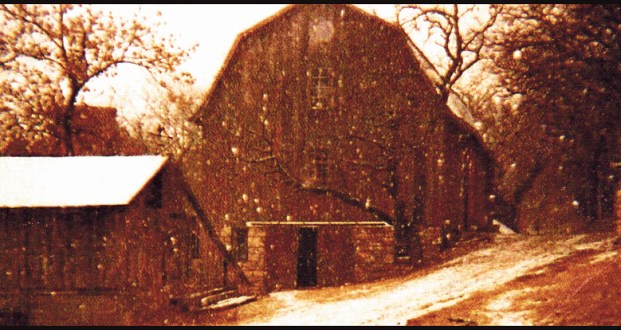
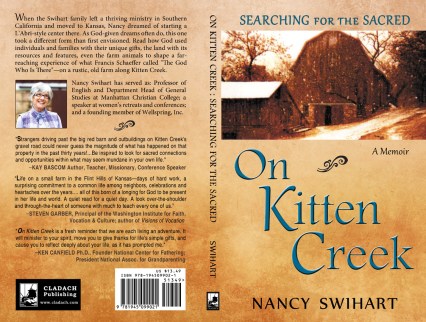
On Kitten Creek: Searching for the Sacred by Nancy Swihart is a remarkable, modern day adventure story about how one family, grounded in Christian love and guided and empowered by the Holy Spirit, developed a Christ-honoring community. The power of these verses is fulfilled in her book and life:

In Psalm 71:18, we are encouraged to “declare God’s power to the next generation, His mighty acts to all who are to come.”

Psalm 90:12 tells us to “number our days aright, that we may gain a heart of wisdom.”

As I read Nancy’s story, I remembered my own family’s journey… When our first military assignment took us to Kansas, we were blessed with a life-long friendship with the Swihart family as well as our involvement with Wellspring Ministries. My three children, my wife, and I spent many a happy day frolicking on the Swihart farm, enjoying the uniqueness that only farm life can hold, as well as being impacted by the spiritual adventures that took place there on Kitten Creek. Of particular interest to my animal-loving children was the variety of animals found there, which the Swiharts wove into their ministry (and Nancy into her book) much like C.S. Lewis did in his Narnia stories!

This is a life-changing book as it points to self-introspection in regards to how our own lives might be used to further the Lord’s Kingdom here on this earth.

As a retired U.S. Army soldier and now a professor at the University of Alabama, I was impressed by the Wellspring team’s openness to so many college students… their willingness to simply be present, to listen, and to provide a relational community where young people could experience faith in action.

Nancy’s memoir guides her readers to our Savior and encourages a lifetime of focus on Him and the gospel. It reminds us that God provides, corrects, leads, and answers our prayers and needs as we continually seek His presence in our lives. The importance of remembrance is emphasized as the Lord incorporates our whole lives into the strength of our witness for Him, and the value of praying and thinking the Scriptures is encouraged.

In a personal application of this book, though us city folk do not inhabit a farm in Kansas, we do have a small cabin on a river in the Appalachian mountains in north Alabama. We are now inspired to place a Christ-focus in our times there for our family and friends.

On a professional note, I am part of research and ministry with aging congregations across the world. Our team plans to recommend Nancy’s inspirational book as an encouragement to older persons of faith to share their Christ-honoring stories with the next generation and to remind adult children to capture the stories of their parents and grandparents. Nancy provides insightful suggestions and resources about how to tailor and accomplish this. Her own book is a superb example of how one’s own family story can impact this world for the Lord and His life-saving mission.

–Dr. Mike Parker, Professor, University of Alabama, Associate Professor, UAB Medical School, Department of Geriatric Medicine, Non-Resident Scholar, Duke Center for Spirituality and Health


Time for Truth, Accountability, and Healing

Timing. We often hear “in God’s time” or “timing is everything” or “this isn’t the right time” or “the time has come.” One thing we know, time keeps moving forward. And sometimes, when the pendulum swings by, you need to grab hold. That’s what author Susan Jenkins did with the Facebook post pictured below.

The “recent events in the news” Susan speaks of here are the many reports and stories exposing sexual harassment and abuse of women by men in positions of authority. In Susan’s memoir, Scandalon: Running From Shame and Finding God’s Scandalous Love, she tells her own story of sexual abuse by a pastor, emotional abuse in a marriage, and of scandal in her family. Hard things to write about and bring to the light. But that is often part of healing.

Susan also describes how she fled to—and lived in—China for 15 years. There Susan got to know the Chinese and observe the effects of trauma and abuse they suffered under Communism. God used her time in China to help bring the healing she needed. Inspiring reading!

I’m going to try using a Facebook screen shot here. Below is Susan’s public post to her many followers, which she shared on, January 16, 2018.

It’s time, all right. Time for truth and accountability. Time for healing.


When Your Beloved Home Country Becomes an Impossible Place to Live

Usually your native country is your homeland. That’s where you belong, live in community, practice the traditions of your people, enjoy the natural beauty and resources of the land.

But for many people in some places of the world their familiar and beloved home place is violently disrupted. Racial, religious, and territorial conflicts arise; corrupt governments crumble or oppress; natural disasters occur; genocide comes down hard.

How would you describe such a country? These people call it “home.” They don’t want to leave their home. But the time came they had to flee for their lives.

For instance, we have published the stories of refugees from South Sudan and Darfur. Here are three of them.

This is Muna Maria and her family. She was a child in a south Sudan village. “When I was six or seven years old I was abducted by a man from north Sudan…. On the day I was taken, the government soldiers began shooting in our direction and the mango grove caught on fire. Homes and shops burned down. All the children ran in different directions. They didn’t know where to go—they saw no way out. That’s when a soldier grabbed me and took me away. It must have been chaos in our village—parents looking for their children and children who had run too far away and couldn’t find their way home. …”

This is Gabriel. He begins his story with: “During Sudan’s Civil War that began in 1983, government troops from the north attacked and bombed my village in the south. My family was separated—we all ran in different directions. Most were killed. At that point, I was still with my mother, but when I was eleven years old I separated from her and fled with other young boys to Ethiopia. Eventually I began wandering from place to place in East Africa. But wherever I went, I was an outsider, a refugee with no documents…” For some time he was put in a “terrible, terrible jail.” Gabriel’s youth was a saga too long to tell here.

This is Muna from Darfur. Her story is of horrendous suffering. Her husband and five of her six children were killed. She says, “Nothing remained in our town after the attack on that black day. It was the rainy season when it feels like heaven opens and pours buckets of water down to the earth. My son and I ran in the rain and in the darkness. No light anywhere. I tripped and fell in the mud. My house dress caught on the thorny bushes and trees. I lost all my clothes but had to keep running. Me, who always wore the beautiful, colorful dresses and scarves common to our tribe. We finally reached the forest and hid like wild animals.”

To read more of the stories of these and other refugees from Sudan, get the book A People Tall and Smooth by Judith Galblum Pex.

Let’s keep our minds and hearts and arms open to the desperately needy in our world no matter from what beloved homeland they have had to flee.


Top Photo: © Can Stock Photo / Satori