Tag: Creativity

Poetry is for Sharing

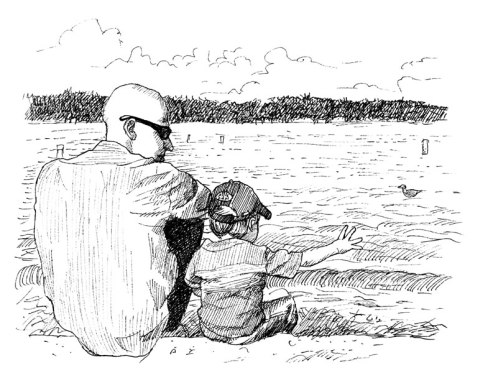
This is me and a grandchild who also enjoys and writes some poetry … and who contributed art to three of my poetry books.

Poetry is for sharing. It brings people together in community to sing, listen, illustrate, recite together. Poetry that comes from the heart also touches hearts. Poetry reminds us of our common humanity. Scripture Psalms are poetry. Song lyrics and hymns are poetry. Nursery rhymes gave us some of our first experiences of rhyme and meter. As our society becomes more mechanized and tech-centered, a hunger and appreciation for poetry is growing. Really, I can’t imagine the human experience without poetry.

I started writing poems in fifth grade. Proud of my first real poem (It was about Jesus as my friend) I showed it to my Sunday School teacher. She said, “You should send this to the Junior Joys!” My parents, though, cautioned me, “Don’t get your hopes up. They receive lots of submissions.”

Well, I took courage and sent my poem to the publication’s masthead address. Then waited. About six months later, it appeared in print! To think that Sunday School kids and their parents across the country were reading verses of my words and feelings. Those verses  expressed something others could relate to—and maybe be encouraged by. Perhaps my little poem helped them put words to their own experience, or the experience they wanted to have.

As I grew up, composing poems in my journals to express childhood wonder—or teenage angst—was mostly private outlet. But the verses stepped out of my personal reveries and the locked pages of my diary when I contributed a piece to my high school poetry journal. Then a teacher asked me to read another of my poems to the class. And later, my college creative writing teacher read a poem of mine to her class.

In those situations I realized how the rhythm and rhyme, the sound and sense of a poem can connect writer, reader, and hearers in a shared experience, shape a shared vision.

As a young adult, when a friend moved away, I was asked to write a poem and read it at her going-away party. Later, for my sister’s birthday party, I composed and read a poem.

When I had a family of my own, our Thanksgiving tradition became one where each family member brought something creative to the dinner table to share: a Thanksgiving or Fall themed poem, a scripture or psalm, a picture colored for the occasion.

Through the years I got busy with church work, music ministry, freelance writing, and family. But poetry was a gift that stayed in the background and came to the fore to help me express my emotions during times of loss and grief, as well as times of wonder and joy. I sometimes shared them with friends. Then I began submitting poems to publications. Here’s an example of one that was published:

There came a time when it dawned on me I had a pile of poems produced in all stages of my life (up to then). I had published a novel and more than one nonfiction book of my own—and numerous book for other authors. Why not publish a collection of my poetry? I arranged the poems in reverse chronological order, from the most recent all the way back to that 5th grade poem from Junior Joys. So many memories!—some easier than others to recall. I titled it Remembering Softly: A Life In Poems. It included colorful art by two creative young granddaughters.

Book Cover: Remembering Softly: A Life In Poems

The book garnered positive reviews. And it fostered togetherness. For instance:

  • One niece told me she was reading the poems to her boyfriend.
  • My father, who was about 90 at the time and experiencing dementia, kept the book on his chair-side table to pick up and read now and then. He was convinced that the picture on the cover was me! I couldn’t change his mind on that, but I decided that was okay if it helped him feel closer to me (since I lived hundreds of miles away).

When you’re a poet and/or a lover of poetry, you talk with friends about poetry. Here’s a pic from a video of me chatting with a friend about her poetry:

When I’ve had opportunity, I have taught others about poetry, to help them appreciate its depths and treasures, and to help those who want to communicate through poetry to learn poetic techniques. This happened mostly at writers conferences.

Poetry readings also bring people together around the sharing of poetry. At this local literary event, I read from Remembering Softly to an audience of all ages. It was a new experience for me to not personally know a single person in the audience:

You just never know where and to whom your poetry will go. Here is a friend and loyal fan, Jim. He lives in Texas where his local B&N store held open mike nights. He took my second published book of poetry, Glimpsing Glory, and read from it to the assembled bookstore cafe crowd!

Glimpsing Glory came out at the same time as the Covid pandemic. One reader, a businessman, frustrated with lockdown and online meetings, shared this poem with a Zoom group:

Screen time in spring is deadening,
though perhaps necessary.
But more needed is the feel
of mountain breezes in your lungs,
a rocky trail under your feet,
the velvet of unfurling leaves
sweet scents of new-mown grass
and just-turned earth,
the taste of first strawberries.

Book signing events happen, too, now and then. My husband, Larry, and I participated in this event in Denver where I signed and sold books, including the illustrated Christmas story-in-verse, Something Is Coming To Our World.

You might even find your dog enjoys your poetry. (We know cowboys sing to their cows.) Here my dog, Jasper, seems to be engrossed in the anthology, The Animals In Our Lives, to which I contributed a poem about taking Jasper for neighborhood walks: “Canine Social Media.”

This humorous poem is the one that won me an award from The Dog Writers Association of America:

Meanwhile, poems keep coming to my heart and mind. And as I share them, they bring people together. I invite you to join the reading community of my latest poetry collection:

I wish you happy and meaningful poetry reading and sharing!

Joy and peace,


If you appreciate my posts and poetry, I hope you’ll read my books! If you want to send some quick encouragement for me to keep on keeping on, then here’s something else you can do:

Much appreciated!


“An Earthly Father Who Just Loves Me”

Fathering with faithfulness, courage and hope through pain and uncertainty.

A YOUNG FATHER’S BATTLE

(An excerpt from Mark Fraley‘s Sketchbook story, CREATION OF CALM):

 My body has been invaded.

“Dear God, comfort them! I can’t right now.”

“The hardest part… is not being able to pick up my son when he is close to tears.

My heavenly Father says, “I love you and I know it hurts. Put your faith in me.”

Moments together turn into hope, a hope that is reachable and lasting.

My children provide me with strength needed to move forward. I can forget my condition when they are with me.

“So we’re not giving up. How could we! Even though on the outside it often looks like things are falling apart on us, on the inside, where God is making new life, not a day goes by without his unfolding grace.” (2 Corinthians 4:16-17 MSG)

A lot of who I am today comes from who my dad has been for years. I thank the Lord for the gift of an earthly father who just loved me!

DING

An encouraging book for anyone facing trials and challenges.

Publishing During the Coronavirus Pandemic and Social Isolation

Photo by Julentto Photography on Unsplash

Like everyone else, Cladach has felt the effects and isolation of the virus. Especially in these ways:

  • Amazon, where many of our sales happen, has de-prioritized orders, sales, and shipping of books during the pandemic as they concentrate on shipping more urgently needed items. But, the good news is we’ve heard from customers that their orders are on the way. Amazon has our books in stock and will fulfill orders, though the ship time may be longer than usual. So go ahead and place those orders!
  • Postponed spring titles and uncertain release dates. But the following books will release in 2020 (dates to be announced):
    • A BRAVE LIFE by Janyne McConnaughey, PhD
    • BIBLE POEMS by Donna Marie Merritt
    • UNPAUSED : Poems by Alice Scott-Ferguson
  • Author events cancelled. Here are a few examples:
    • Catherine Lawton (that’s me) was scheduled to teach three workshops at the Colorado Christian Writers Conference, which had to be canceled, but conference director Marlene Bagnull says she plans to save the 2020 program in 2021. Conferees can look forward to my workshops on these topics in May 2021 in Estes Park, Colorado: 1) Poetry, 2) Creative Nonfiction, 3) Marketing
    • Janyne McConnaughey (author of BRAVE and now living in Seattle) has had to cancel her early May trip to Colorado Springs, where she was scheduled to participate in the Mountain of Authors event and do a book signing at a local shop.
    • Alice Scott-Ferguson had anticipated a trip in April to Monument, Colorado for a Pen Women’s event, meeting with friends, authors and readers and selling copies of Pausing in the Passing Places.This event was postponed.
  • As we’ve all heard, small businesses, including those in the book business, have suffered because of lower sales, closures, layoffs. One way to support local independent bookstores is to purchase books through the nation-wide, excellent and efficient online Bookshop program, Books are shipped directly from printer/warehouses, and the profits from these online sales are shared among all participating, local independent bookstores. Cladach titles that are available through IndieBound are also searchable and orderable through Bookshop. For instance, you can find my new book, Glimpsing Glory, at Bookshop HERE.
  • We all feel the isolation. “Staying Home” and social distancing can bring out creativity and is surely teaching us some important and hopefully lasting lessons if we will listen in the solitude to what our very-present God is whispering to us. May it be so. May healing and hope spread through our world, and may we come together again soon!
  • Some heartwarming stories are coming out of this difficult season, as people choose to show generosity and a giving attitude. Donna Marie Merritt (author of forthcoming BIBLE POEMS, who lives, writes, and works as a librarian in Connecticut) shared this happy, heartwarming report: “Last night I was feeling helpless, looking at a box of children’s books [that she authored] sitting idle because there are no book events right now. Then … I posted on a local FB page that any child in need of a book right now could get a signed copy from me free. Within hours, the entire box was signed and waiting in bags on my porch for pick-up. I had unemployed parents reach out, parents with bored children, parents who can’t bring their kids to the library during this crisis. It was the best ‘book event’ of my career. And some have begun sending photos.” [Photos posted below with permission].

Realistic Poetry Review: Remembering Softly

The glory, sorrow and unquestionable beauty of life are encapsulated in Catherine Lawton’s Remembering Softly. Lawton’s prose gently captures, like coaxing a firefly into the palm, the indescribable joy of simply seeing nature and the world in action. Sure, there are vile things out there, but there are precious things which overcome them and are worth living to witness. When misfortune passes, the memories of goodness will be everlasting.

So begins a just-published review of my poetry collection, Remembering Softly: A Life In Poems, reviewed by Realistic Poetry International. They seem to have “caught” and understood my poems. The review continues:


Remembering Softly is a personal and inspirational collection with Christian themes. The poems span several years of Lawton’s writing and experiences and are richly emotional. Reading it conjures a feeling of great creation, like seeing the kaleidoscopic glimmer of sunbeams through the fire reds of autumn woods, or perhaps one of those pure winter days where the sky is an unblemished white like being just beneath the floor of heaven.

“Shadows” stood out to me, as did “Glory” and “A Walk at Dusk” as strong points of the compilation. “A Walk at Dusk” in particular is a thought-provoking and fearless piece….

Remembering Softly is truly a beautiful book, and it’s hard to find anything to dislike. If I absolutely had to choose something, some of the personal poems addressed to certain people may not be as resonant to a new reader, though it’s obvious that they were written out of love. The illustrations are a charming touch, and fit well with the poems.

I would recommend Lawton’s collection wholeheartedly, with a 5 out of 5 stars.


My thanks to Realistic Poetry for their reading, evaluation, and recommendation of my first volume of poetry. You can read their entire review HERE.

Graphic by Realistic Poetry Intl.

Writers: Poetry Can Sharpen Your Prose

For Writers: Ten Ways Poetry Can Improve Your Prose

  1. Writing poetry develops skills of concise wording (something we editors like!).

  1. The writing (and reading) of poetry can sharpen your observation skills.

  1. Because syntax matters in poetry, you will improve in your understanding of syntactic matters.

  1. Figures of speech used in poetry teach you finer subtleties of word usage and connotations and make you a better wordsmith.

  1. Poetic precision of words will sharpen your skill in choosing the most fitting, evocative, precise words for your prose.

  1. The rhythms and rhymes of poetry tune your ear to hear fluctuations and patterns in the sense and sound of language.

  1. Writing (or reading) a poem can provide a rejuvenating break from a long writing project. It may even break you out of writers block.

  1. Writing a poem can help you distill a thought, discover a kernel of truth, and find your focus on a topic to develop more fully later, in prose.

  1. A poem or short rhyme can add variety/spice/interest to a longer piece, when used in an organic way in a novel, memoir, blog post, even an expository piece of writing (and it looks good on the page).

  1. You may possibly find your calling as a poet and discover that your poetry will reach your readers’ minds and hearts more effectively than 1,000s of prose words.

∼∼∼∼∼∼∼∼∼∼∼∼∼∼∼∼∼∼∼∼∼∼


This list first appeared as a guest post on Marlene Bagnull’s blog “Write His Answer” at:

https://writehisanswer.wordpress.com/2018/03/19/why-write-poetry/


Photo credit:  ©David Lawton

Delicious Poetry

canstockphoto32506025

If you enjoy digesting good poetry, and if you find yourself craving poems that are “delicious, nutritious, crisp, textured, with just the right touch of spice” … then you’ll agree with poet (and poetry editor) Mary Harwell Sayler who uses these culinary words to describe poetry that stands out from the usual crowded buffet of verse filled with “empty calories, rehashed left-overs, and saccharine sweetness.”

You can find a list of “delicious” poetry books Mary recommended in her post “Take a poem to lunch.”

I was delighted to find my name and poetry collection, Remembering Softly: A Life in Poems appearing on her list!

I agree with Mary about the importance of a creative, healthy diet of poetry. Sometimes I feel the need for “comfort food” poems that warm my heart like savory stew warms my insides. Or poems that stimulate my senses the way a good, strong cup of coffee wakes me up in the morning. Or poems that bring the catharsis of tears and laughter, like lunch with friends.

Help yourself to a serving of skillfully and lovingly-prepared, delicious poetry today.

~Catherine Lawton


Photo: ©CanStockPhoto/thai6D

A Checklist to Make Your Writing Shine

A marshy field in Colorado

The marshy field in this photo teems with life. When our car speeds by it, though, we don’t notice or experience the wildlife hidden in the grasses, wading in the mud, singing from the reeds. One day we stopped our car, rolled down windows; looked through binoculars; listened, felt, smelled; tasted the breezes. Myriads of bird life, colors, textures of fauna and flora brought the place alive to us. Good writing does that also: draws in the reader, reveals hidden things, opens possibilities.

I taught from the following list at a recent writers workshop. Afterwards, a couple of wide-eyed writers said to me, “You really want good writing.”

Well, yes, I do! The better-written a manuscript comes to me, the more I like it. Here at Cladach we may resonate with the premise and material of a nonfiction manuscript—we may like a novel’s characters and plot—so much that we are willing to devote the editing time needed to bring the writing quality and style up to these standards. We may ask an author to go back and re-write/revise/re-work a manuscript. Then we also do in-house macro editing, line editing, and copy editing. The following list gives most of the elements of style and “good writing” that we look for in a manuscript and strive for in the books we publish.

Here’s how to give your writing pizzazz so readers will want to invest in it, engage with it—be entertained, convinced, and inspired by what you say. Check your writing against this list to make sure it communicates as clearly and persuasively as possible.

 1.  Have you written from your heart as well as your mind? (If not, read this post. If yes, go on to the rest of the list.)

 2.  Write in the active voice. Choose strong, active verbs.

 3.  Write concretely, rather than abstractly. Show, don’t just tell. Appeal to all the senses.

 4.  In nonfiction as well as fiction, use storytelling as much as possible.

 5.  Stay in a definite, consistent POV. Through whose eyes is the reader seeing?

 6.  Hook the reader on the first page/ first paragraph/ first sentence/ first word.

 7.  Keep the reader’s attention as each word, each sentence, each paragraph, each chapter leads to the next.

 8.  Maintain a logical or chronological flow of thought or action. Use transitions when needed.

 9.  Strive for precision and conciseness. Cut extraneous/ repetitious words and phrases. Less is more.

10.  Give thought to word choices—consider subtleties, connotations, nuances; find the zing and zest of the right word.

11.  Vary sentence structure and length. Use periodic sentences often (as in these examples).

12.  Search for and remove troublesome words that hide like gremlins in your writing, words that are used compulsively but often aren’t needed. (Click here for my list.)

13.  Use your ear. Do the sentences flow well? In fiction, is that how people sound when they talk? Try reading your writing out loud.