Tag: Generations coming together

Poetry is for Sharing

This is me and a grandchild who also enjoys and writes some poetry … and who contributed art to three of my poetry books.

Poetry is for sharing. It brings people together in community to sing, listen, illustrate, recite together. Poetry that comes from the heart also touches hearts. Poetry reminds us of our common humanity. Scripture Psalms are poetry. Song lyrics and hymns are poetry. Nursery rhymes gave us some of our first experiences of rhyme and meter. As our society becomes more mechanized and tech-centered, a hunger and appreciation for poetry is growing. Really, I can’t imagine the human experience without poetry.

I started writing poems in fifth grade. Proud of my first real poem (It was about Jesus as my friend) I showed it to my Sunday School teacher. She said, “You should send this to the Junior Joys!” My parents, though, cautioned me, “Don’t get your hopes up. They receive lots of submissions.”

Well, I took courage and sent my poem to the publication’s masthead address. Then waited. About six months later, it appeared in print! To think that Sunday School kids and their parents across the country were reading verses of my words and feelings. Those verses  expressed something others could relate to—and maybe be encouraged by. Perhaps my little poem helped them put words to their own experience, or the experience they wanted to have.

As I grew up, composing poems in my journals to express childhood wonder—or teenage angst—was mostly private outlet. But the verses stepped out of my personal reveries and the locked pages of my diary when I contributed a piece to my high school poetry journal. Then a teacher asked me to read another of my poems to the class. And later, my college creative writing teacher read a poem of mine to her class.

In those situations I realized how the rhythm and rhyme, the sound and sense of a poem can connect writer, reader, and hearers in a shared experience, shape a shared vision.

As a young adult, when a friend moved away, I was asked to write a poem and read it at her going-away party. Later, for my sister’s birthday party, I composed and read a poem.

When I had a family of my own, our Thanksgiving tradition became one where each family member brought something creative to the dinner table to share: a Thanksgiving or Fall themed poem, a scripture or psalm, a picture colored for the occasion.

Through the years I got busy with church work, music ministry, freelance writing, and family. But poetry was a gift that stayed in the background and came to the fore to help me express my emotions during times of loss and grief, as well as times of wonder and joy. I sometimes shared them with friends. Then I began submitting poems to publications. Here’s an example of one that was published:

There came a time when it dawned on me I had a pile of poems produced in all stages of my life (up to then). I had published a novel and more than one nonfiction book of my own—and numerous book for other authors. Why not publish a collection of my poetry? I arranged the poems in reverse chronological order, from the most recent all the way back to that 5th grade poem from Junior Joys. So many memories!—some easier than others to recall. I titled it Remembering Softly: A Life In Poems. It included colorful art by two creative young granddaughters.

Book Cover: Remembering Softly: A Life In Poems

The book garnered positive reviews. And it fostered togetherness. For instance:

  • One niece told me she was reading the poems to her boyfriend.
  • My father, who was about 90 at the time and experiencing dementia, kept the book on his chair-side table to pick up and read now and then. He was convinced that the picture on the cover was me! I couldn’t change his mind on that, but I decided that was okay if it helped him feel closer to me (since I lived hundreds of miles away).

When you’re a poet and/or a lover of poetry, you talk with friends about poetry. Here’s a pic from a video of me chatting with a friend about her poetry:

When I’ve had opportunity, I have taught others about poetry, to help them appreciate its depths and treasures, and to help those who want to communicate through poetry to learn poetic techniques. This happened mostly at writers conferences.

Poetry readings also bring people together around the sharing of poetry. At this local literary event, I read from Remembering Softly to an audience of all ages. It was a new experience for me to not personally know a single person in the audience:

You just never know where and to whom your poetry will go. Here is a friend and loyal fan, Jim. He lives in Texas where his local B&N store held open mike nights. He took my second published book of poetry, Glimpsing Glory, and read from it to the assembled bookstore cafe crowd!

Glimpsing Glory came out at the same time as the Covid pandemic. One reader, a businessman, frustrated with lockdown and online meetings, shared this poem with a Zoom group:

Screen time in spring is deadening,
though perhaps necessary.
But more needed is the feel
of mountain breezes in your lungs,
a rocky trail under your feet,
the velvet of unfurling leaves
sweet scents of new-mown grass
and just-turned earth,
the taste of first strawberries.

Book signing events happen, too, now and then. My husband, Larry, and I participated in this event in Denver where I signed and sold books, including the illustrated Christmas story-in-verse, Something Is Coming To Our World.

You might even find your dog enjoys your poetry. (We know cowboys sing to their cows.) Here my dog, Jasper, seems to be engrossed in the anthology, The Animals In Our Lives, to which I contributed a poem about taking Jasper for neighborhood walks: “Canine Social Media.”

This humorous poem is the one that won me an award from The Dog Writers Association of America:

Meanwhile, poems keep coming to my heart and mind. And as I share them, they bring people together. I invite you to join the reading community of my latest poetry collection:

I wish you happy and meaningful poetry reading and sharing!

Joy and peace,


If you appreciate my posts and poetry, I hope you’ll read my books! If you want to send some quick encouragement for me to keep on keeping on, then here’s something else you can do:

Much appreciated!


Everything I Need to Know About Publishing I Learned from my Preacher Father

My father, G.H. Cummings, preaching on the radio as a young man

Practically being raised on a church pew helped set me on a literary path. We sang with gusto the gospel song, “Publish glad tidings, tidings of peace; tidings of Jesus, redemption and release.” During my growing-up years as my father’s daughter, watching him and my mother minister in many churches, I learned:

The potency and potential of words in a book.

We were people of two books: the Bible and the hymnal. Every church service we opened that wondrous, heavy book, often holding it so the person next to us could share it. The hymnal united us as we joined our voices in lilting melodies and straightforward harmonies accompanied by my mother’s lively piano playing. All the symbols to help us make music together resided on the pages of that book, and resulted in heart-stirring, mind-engaging, and soul-satisfying rhythm, melody, harmony, rhyme and meaning. One hymn declared:

Publish glad tidings, tidings of peace,

Tidings of Jesus, redemption and release!

In every meeting the Bible was also opened—and revered. The congregation stood for “the reading of the Word.” With a reverent, sonorous voice, the preacher read a passage from the Bible, then exhorted from its inexhaustible storehouse of truth, wisdom, and life application. I saw evangelists hold their big, black, leather Bibles aloft in one large hand while exclaiming something like, “The Word of God is alive! It is sharper than any two-edged sword, piercing enough to reveal your sin.” And I quaked. But I also learned, quite young, that real comfort could be experienced from those pages. No mere words on paper. But alive! Jumping off the page and into the mind and heart of the reader or the listener. Quickening!

The joy of writing, printing, and disseminating words on paper.

I watched my preacher father as he typed the church bulletin—and perhaps a newsletter—during the week on his old black typewriter (I loved the click clack of the keys and how the little hammers hit the paper, resulting in words appearing and forming themselves into sentences that said something and that people would read and use to plan their week). On Saturday Daddy would crank out copies with his mimeograph machine. I can still smell the ink and hear the sheets of paper swoosh round the rollers and shoot out onto the pile of materials ready to be folded and stacked, then handed out and read—to inform, unite, and influence—to be published!

The importance of getting the word out.

Twice a year our churches held extended revival services with an itinerant evangelist, and, in preparation, Daddy would mimeograph a flyer about the upcoming week of meetings. One time he paid my sister and me per city block to take the flyers door-to-door and invite people to the services (though “city block” doesn’t quite describe neighborhoods in these rural towns surrounded by farms). My sister and I learned the importance of overcoming our trepidation, knocking on doors, and creating buzz (much like the publicity side of book publishing).

The value of reading and sharing books.

We had few toys, and TV (which we acquired when I was 11) was our only “tech” entertainment. But always there were books. Books lined the shelves in my father’s study. He took my sister and me to the public library regularly, encouraging us to browse and check out books that interested us. My sister read every horse book she could find, especially those by Walter Farley. I read all the Louisa May Alcott books. And when we brought books home from school or library, our mother often read them, too, and we all enjoyed discussing together the stories. In fact, my sister and I always told each other the stories we read. As a result, I felt I’d read the Black Stallion books even though I never did. And she knew the characters and plots in Little Women, Joe’s Boys, and Under the Lilacs even though she didn’t read them. She didn’t have to. That ability to vicariously experience the stories really helped, because there were so many more books to discover! (A side note: As a girl I’d hear people argue their point in conversation by saying, “I know it’s true. I read it in a book!” Whether people were readers or not, most had a sort of reverential awe of books.)

The importance of knowing your readers, your audience, your market.

My father made it a practice to call on his flock in their homes regularly and also to be there whenever trouble hit a family. He would stop by their businesses, farms, and work places for a friendly chat. When he stood in the pulpit to preach on Sunday, he knew those people. He knew their families, their joys and sorrows, the challenges they faced. He also knew their interests, their hobbies, what made them laugh or cry.

How to recruit, train, and encourage workers.

The work and mission of the church needed people of all abilities and ages (and still does). I saw discernment in operation, encouragement expressed, and responsibilities entrusted. Organizing, scheduling, holding meetings were necessary. But loving God and loving people mattered most. Whether or not I heard that expressed in so many words, I definitely “caught” the mindset. As a publisher I want to see increased sales and distribution. I want well-edited and designed books, I want engaged authors, reliable print providers, and enthusiastic book reviewers. I want readers to be encouraged, enlightened, and entertained by our books. But most of all I want to experience God’s presence in all we do. I want to always remember that, as a Christian publisher, what we publish truly is “glad tidings” for all!

~~~

Note: I am republishing this revised version of the post published 9 years ago. This material is also included in my newest book, Write & Publish Organically: Dig Deep, Tend the Soil, Help Newness Emerge. Let me know if you read the book, enjoy it, and how it helps you in communicating with others within the challenges of our world today!

~Catherine Lawton

Mother Love

We feel sentimental, grateful, or maybe sad on Mother’s Day.

Mother love is beautiful. In many ways it reflects God’s love. It is something to celebrate.

But giving and receiving love between mothers and children doesn’t always come easy.

So many obstacles can get in the way. What do we do, then, with mother wounds and losses, the conflicts, and the unmet needs we may carry? In the book, Journeys to Mother Love (Cladach, 2012) nine women – mothers and daughters of all ages – share how they overcame hurts and conflicts between mother and child, experienced relational healing, and found new freedom to give and receive love. Women with broken places in their relationships with mother or child can begin their own healing journey as they read:

“Run, Run, as Fast as You Can” by A.R. Cecil

“She Did Her Best” by Treva Brown

“Take Care of Your Mother” by Verna Hill Simms

“Finding the Blessings in Alzheimer’s” by Kerry Luksic

“Beauty from Barrenness” by Kyleen Stevenson-Braxton

“When I Feel Forsaken” by Catherine Lawton

“Finishing Well” by Ellen Cardwell

“Walking My Mother Home” by Ardis A. Nelson

As always, I appreciate readers and reviewers taking time to contribute their responses after reading the book. For example:

“An anthology of heartfelt true stories by Christian women about the healing gifts of God, and how He helped mothers bridge rifts between themselves and their children or stepchildren…. Profound, powerful … highly recommended.”

− Midwest Book Review

“The emotional distance between a mother and daughter can be painful and prolonged. The heart-wrenching stories in Journeys to Mother Love reveal how God can bridge this chasm with healing and love.”

− Nancy Parker Brummett, author of Take My Hand Again: A Faith-Based Guide for Helping Aging Parents

“From murder to manipulation, Alzheimer’s to abandonment, through barrenness and bewilderment, this crisply-written compilation of stories is arresting and unflinchingly honest. You will find elements of your own journey in all of them; you will want to join the company of these courageous women who are now traveling with less of a limp and more of a leap.”

− Alice Scott-Ferguson, author of Mothers Can’t Be Everywhere, But God Is

Mothers of all ages, from all walks of life, in their own voices tell their stories of hurt and healing to guide others down similar paths to freedom and forgiveness. If you felt neglected as a child, suffered abuse of one sort or another or had to deal with a complicated mother/daughter relationship, this book is for you. Each chapter ends with a short bio and photo of the author, and it was interesting to note how negative experiences can turn into ministries. All the women testify to the faithfulness of God regardless of circumstances and offer inspirational reading at its best.”
− Shirley Brosius, author of Sisterhood of Faith

     Motherhood is a journey! As Caroline Kennedy wrote in She Walks in Beauty, “Having a child defines us for the rest of our lives…. Each mother-child relationship teaches us our limitations and our strengths. It changes us in constantly unfolding ways and entwines us in the unpredictable mystery of another life….”

     Yes, and when we attend to the grace entwined in that mystery, then healing, love, even forgiveness can begin to unfold and birth beauty in and through even difficult, challenged, and strained mother-child relationships.

(This post first written  in 2017 and revised May 10 and 13, 2024.)

Clouds of Glory

An unseasonably warm winter day (here in Colorado) yesterday prompted my husband and me to go out birding. We took our nature-loving granddaughter with us. We drove toward the mountains west of us, into a little canyon formed by a ridge along which a small creek flows, where an American Woodcock has been spotted (a common bird in some states but a rare visitor in Colorado).

Our granddaughter suddenly exclaimed, “There’s a rainbow cloud. I love rainbow clouds.”

I looked out the car window, and sure enough, all the colors of the rainbow were displayed in this cloud against a blue sky. I’d never before taken notice of such a cloud. Sometimes at dusk the Colorado sky is rimmed all around with clouds glowing orange and pink. This was about 2:45 p.m., thoughnot even close to sunset. The day was sunny, warm (for February), and dry. Yet this one, lone cloud contained a rainbow. We quickly and excitedly took pictures with our phones. (See photo above.)

The three of us shared a moment of awe and wonder.

I recently read an old book by the Scottish writer and minister, George MacDonald, The Hope of the Gospel. In it, he quoted the poem by William Wordsworth

(To continue reading this post go to my On Paths of Prayer and Poetry blog. This post has been moved there.)


Read Together this Christmas

Take a little time during holiday activities and read something together: a story, a poem, an Advent devotional, a Psalm, Luke chapter 2, a children’s book. You’ll create closeness, meaningful traditions, and enrich your Christmas celebration.

A few book suggestions:

Something Is Coming to Our World: How a Backyard Bird Sees Christmas

White As Snow: A Christmas Story

That Was the Best Christmas!


Bobo, Ouyang, and Susan: Experiencing Community

Beauty, comfort, and caring community can come to us in surprising ways.

Ouyang is a Chinese friend of our author Susan Elaine Jenkins. They became acquainted while she lived and taught school in China for many years. Ouyang appears in Susan’s memoir SCANDALON: Running From Shame and Finding God’s Scandalous Love. If you read Scandalon, then you know how Ouyang helped Susan adjust to life in China and how Susan helped Ouyang better understand Christianity. Their conversations shared in the book are deep and moving and show God’s hand at work across cultures.

So I was delighted when Susan and Ouyang contributed a story, “Bobo the Hedgehog,” to our most-recent release, The Animals In Our Lives: Stories of Companionship and Awe.

“Bobo the Hedgehog” relates a moving childhood experience of Ouyang during the dreary days of the Communist Revolution in China—a period of time with very little beauty, comfort, or caring community. Seemingly by accident Ouyang found all those things—beauty, comfort, and caring community—when he happened upon a rare thing, a rose garden, one of the few gardens sanctioned by the government. And inside that “secret,” gated garden was a kind old gardener who befriended Ouyang. When the old man found a hedgehog by the river, he kept it hidden and let it be Ouyang’s “pet” for a while until the risk became too great and the hedgehog was released back into the wild. But the comfort and joy a pet hedgehog brought to the boy never left him and became a part of who he is today.

The kind gardener (however clandestinely) sharing the creature with him, at a time when families were not allowed to own pets, a terrible time when starving people were eating whatever animals, including pets, they could find … is the type of experience that can give needed hope to a child in a bleak environment.

Ouyang’s childhood memory, written for him by Susan, provides a rare glimpse into what life was like in those difficult times. It also gives a glimpse into the life and character of the boy who became the man, Ouyang.

Soon after The Animals In Our Lives was published, Ouyang found this little hedgehog (pictured above with him) on a river bank. Happy, formative, hope-giving memories again flooded back to his heart and mind.

Ouyang’s story of “Bobo the Hedgehog” is one of many included in The Animals In Our Lives, that demonstrate how animals of all kinds can give us companionship, the experience of awe, and a sense of God’s presence.


Watching For God In Season and Out

We have never experienced a Christmas like this one. No children’s programs at church, school, or community. No concerts to attend. Not much “window shopping.” No caroling door-to-door, no dinner parties, few gatherings or family reunions. I do think I see more people putting lights on their houses and trees outside.

In this season, as during this whole pandemic year, my husband and I have found great comfort in nature, even right in our backyard, especially the many birds that visit our feeders, birdbath, and trees and shrubs.

On a more normal Christmas a few years ago, our young grandchildren came to visit. We enjoyed playing in the snow and other activities, such as making pine cone suet feeders for the birds. Later I wrote these verses (below) and even illustrated them in a little Advent / Christmas book for the grandchildren. Two years ago I published this story-in-verse, entitled Something Is Coming To Our World.

These verses tell something of my own hopeful vision for the world, how our loving God is present to all creation, and has come into our world in the form of Jesus, the Incarnate Christ, whose coming again we await with anticipation, and with whom we can now be “partners,” co-laborers, caring for creation and loving people. (May God’s reign soon fully come!)

• • • • •

What Is Coming To Our World?
(How a Backyard Bird Sees Christmas)

Seasons have passed of warm, wiggly worms,
bountiful gardens and bright wildflowers,
plentiful insects on leaf and wing,
sun traveling high across the sky,
and all good things that make us sing.

The days grow shorter. The air grows colder.
We search now for meals and warm roost.
When the hawk and fox come hunting,
I will quickly hide in a bush.
The chill in the air tells me high on the peaks
snowflakes are drifting in piles white and deep;
soon, in this place that’s home to me
frost will sparkle and snow will fall.
Creator God, who gives sunshine and seeds,
berries and water, spring, summer, fall—
surely wants us to thrive all year long!

Bells are ringing. I hear singing.
Good aromas are increasing.
What should we anticipate?
What story does the music relate?
When the people open their doors,
I smell something warm, spicy and sweet,
and the seeds they bring us are nice.
Nippier days turn their noses pink,
but something good is coming, I think.
Anticipation fills the air.

Nights are cold, but lights are bright
and they twinkle everywhere.
It looks like stars are coming down
on trees and houses from the air.

It looks to me—all around—
like Heaven’s surely coming down!

Children come bounding out in the snow,
all rosy and bundled for winter play.
They gather greenery, seedpods, and cones—
much like we do sometimes in spring.
I wonder what they’re going to make?
A blue-eyed girl and boy look my way.

I start to fly; then I hear the girl say,
‘Hello, little bird. Here’s a present for you.
Do you know that tomorrow is Christmas Day?’
The boy says, ‘Merry Christmas to you, little bird,
and happy celebrations with your friends, too.’
I like the peanut butter and seeds they’ve pressed
into the pine cones they hang in the tree.

I’ll fly to the highest branch and sing
a song of Heaven coming down,
light in the darkness, warmth in the cold,
provision and plenty, promises of old.
As seeds wait patiently within the earth,
there’s hope for us all—even little birds.
All feathered friends, all four-legged creatures,
all living things, now hear my song.
All who Creator God called ‘good’:
God cares—and comes—for all.

I will sing the song God gives me.
I will wing the flight that lifts me.
I will listen to the glorious sounds,
for Heaven’s love is all around.

~Catherine Lawton

Illustrations from the book, Something Is Coming To Our World: How A Backyard Bird Sees Christmas


Sweet Sorrow at Christmas

Ah, Christmas! Bright lights, hustle and bustle, joyous music and celebrations….

Yet, hidden behind all the glitter, many people feel the pangs of sadness and loneliness more acutely during the Christmas season. If you have ever experienced a great loss at Christmastime, the holiday season awakens that grief again each year.

I know. My mother died on December 19, many years ago. My father was the pastor of a loving church at the time, and the people were sweet to us, though they also grieved the death of their beloved pastor’s wife. Our family found comfort in togetherness—my husband and I with our two toddlers, my sister, and our dad. After the funeral, we stayed and spent Christmas in our parents’ home, with everything around us to remind us of Mother. … But no mother/wife/grandmother. She simply and permanently was not here.

At a time when we celebrated the birth of Jesus who brought new life, we learned first-hand the awful separation and finality of death. The first night after she died, I lay awake in the guest bedroom listening to Daddy sobbing his heart out in the next room.

She was too young to die—in her forties. But she was gone.

On Christmas Eve, my husband and I wanted our toddler children to have fun, not just sadness, so we borrowed little sleds and took them out to play in the snowy woods. In the fresh, crisp air, laughter came as a wonderful relief, and was exactly what Mother would want for us. Maybe she saw us and smiled with joy.

Mother had a way of infusing Christmas with music, anticipation, beauty, delicious tastes and scents, warmth and surprises. She loved decorating the house and the church, preparing special music and programs for Christmas Sunday, often sewing new dresses for my sister and me, baking cookies, and taking us Christmas shopping.

I love Christmas, too; but even after many years, the bright lights, the biting scent of pine, the taste of cinnamon and cider, the making of fudge and fruitcake, the singing of carols, the ringing of Christmas bells, the decorating of the tree, the excitement of gift giving—all is sweet sorrow.

I wonder: Did sadness mix with joy for Mary, the mother of Jesus, when she carried her baby to the temple and heard Simeon prophesy her child’s death? He said, “A sword will pierce your own soul too” (Luke 2:35). Mary didn’t understand yet that Jesus’ death as well as his life would bring eternal joy in the heavens and cause celebrations of his birth for centuries to come. But she would certainly experience heart-piercing sorrow and separation.

Years later, as Mary watched Jesus die a tragic, painful death, did she despair? Or did the memory of the miracles surrounding his birth and life give her hope? Life won out. His death brought our spiritual birth.

Now we know, because of his birth, life and death, we can live—and celebrate Christmas—in the certain hope that death will not have the final victory.

That one Christmas—the year my vibrant, young Mother died—has influenced every one of my Christmases since. Our bereaved family celebrated together that year with gifts and festive food. Then we drove up a snowy hillside to a fresh, flower-covered grave site. The contrast of the red roses and holly-covered grave against the icy, brown hills spoke to my warring emotions.

There, feeling the pain of death’s separation, I looked up into the evening sky and noticed the first star twinkling, and I smiled through my tears. Her physical presence is gone from us here. But someday we may be with her “there.” The realities of pain, suffering, and death are inescapable. But the hope of Christmas lives!


The story of the healing I have experienced in regards to my mother is found in the book, Journeys to Mother Love: Nine Women Tell Their Stories of Forgiveness and Healing.


A Child’s Poetic Expression of Faith on Easter Sunday

Easter Sunday

As we say,

as we sing,

Glory

to the King Almighty.

Glory,

Let us sing,

let us say

Christ has risen

from the grave!

The Lord is great,

the Lord is good!

He forgave us

of our sins!!


—Written by one of my granddaughters (age 10 or 11 at the time) during an Easter Sunday church service as we celebrated Christ’s resurrection. I found this joyful verse written on the back of a bulletin I brought home in my purse. She gave me permission to share it but asked to remain anonymous. This child’s spontaneous expression of faith inspires me anew to praise the One who is risen indeed!


A Spiritual Adventure Story

GUEST POST

by Dr. Mike Parker

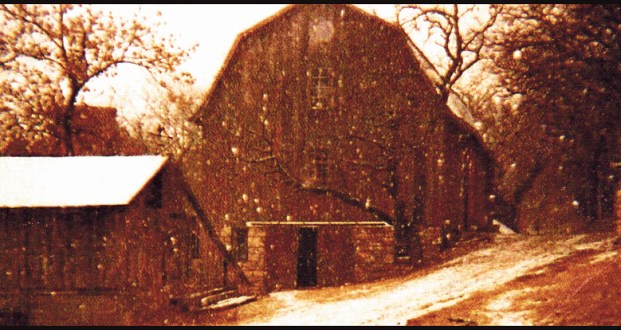
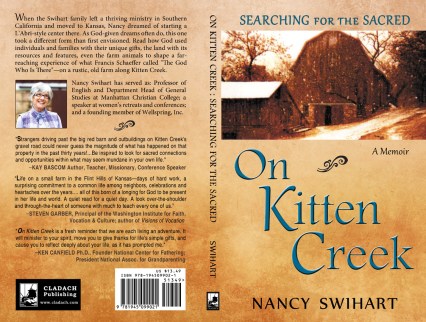
On Kitten Creek: Searching for the Sacred by Nancy Swihart is a remarkable, modern day adventure story about how one family, grounded in Christian love and guided and empowered by the Holy Spirit, developed a Christ-honoring community. The power of these verses is fulfilled in her book and life:

In Psalm 71:18, we are encouraged to “declare God’s power to the next generation, His mighty acts to all who are to come.”

Psalm 90:12 tells us to “number our days aright, that we may gain a heart of wisdom.”

As I read Nancy’s story, I remembered my own family’s journey… When our first military assignment took us to Kansas, we were blessed with a life-long friendship with the Swihart family as well as our involvement with Wellspring Ministries. My three children, my wife, and I spent many a happy day frolicking on the Swihart farm, enjoying the uniqueness that only farm life can hold, as well as being impacted by the spiritual adventures that took place there on Kitten Creek. Of particular interest to my animal-loving children was the variety of animals found there, which the Swiharts wove into their ministry (and Nancy into her book) much like C.S. Lewis did in his Narnia stories!

This is a life-changing book as it points to self-introspection in regards to how our own lives might be used to further the Lord’s Kingdom here on this earth.

As a retired U.S. Army soldier and now a professor at the University of Alabama, I was impressed by the Wellspring team’s openness to so many college students… their willingness to simply be present, to listen, and to provide a relational community where young people could experience faith in action.

Nancy’s memoir guides her readers to our Savior and encourages a lifetime of focus on Him and the gospel. It reminds us that God provides, corrects, leads, and answers our prayers and needs as we continually seek His presence in our lives. The importance of remembrance is emphasized as the Lord incorporates our whole lives into the strength of our witness for Him, and the value of praying and thinking the Scriptures is encouraged.

In a personal application of this book, though us city folk do not inhabit a farm in Kansas, we do have a small cabin on a river in the Appalachian mountains in north Alabama. We are now inspired to place a Christ-focus in our times there for our family and friends.

On a professional note, I am part of research and ministry with aging congregations across the world. Our team plans to recommend Nancy’s inspirational book as an encouragement to older persons of faith to share their Christ-honoring stories with the next generation and to remind adult children to capture the stories of their parents and grandparents. Nancy provides insightful suggestions and resources about how to tailor and accomplish this. Her own book is a superb example of how one’s own family story can impact this world for the Lord and His life-saving mission.

–Dr. Mike Parker, Professor, University of Alabama, Associate Professor, UAB Medical School, Department of Geriatric Medicine, Non-Resident Scholar, Duke Center for Spirituality and Health