Category: Cladach Authors

TAKING RISKS: An Interview with author Jeanie Flierl

Meet Jeanie Flierl, author of the novel, To Conquer A Mountain. My questions are in color. Jeanie’s answers will give you a glimpse of the heart of this warm, talented woman.


Welcome, Jeanie. Thank you for the opportunity to ask you a few questions. First, I’d like to know: In your novel, the main character, Tatum, is a Colorado native. Are you a native also?

No. I was born and raised in Milwaukee, Wisconsin. I moved to Colorado in my twenties because of my love for the mountains. I worked for Safeway for eleven years and met my husband, Denis, there. After home-schooling our three girls, I put all my energy into a retail store in Evergreen, Colorado. My store sells quality chocolates, nuts, and candies.

Sounds yummy. No wonder the retail shop in your novel feels so real! In fact, there’s a lot of realism in your story. What real needs do you think readers may have that your book addresses, that makes it a “must read”?

As the story unfolds, Tatum’s reactions and prayers in moments of happiness or pain reflect real feelings toward God and toward other people. She finds it’s OK to be mad at God, but she doesn’t stay there. In the end, she realizes God was with her all along, in the good and the bad. I think many people, like myself, need to learn that kind of open-hearted honesty before a loving God.

The characters in To Conquer A Mountain definitely come across as authentic. Besides your own daughters, what experience have you had with young adults in their twenties and thirties that helped you envision your book’s characters and conflicts?

Denis and I have worked together in the marriage ministry for more than twenty-five years, teaching communication skills. We have spoken at small conferences and MOPS (Moms of Preschoolers) groups on related subjects.

What got you interested in Mountain Rescue? And how did you conduct your research?

I was in awe of  Alpine Rescue Team in Evergreen. Their Facebook posts were so exciting that I started reading anything I could get my hands on about mountain rescues.  It is mind boggling that these mountaineers, here in Colorado, and elsewhere for that matter, are so selfless in going into the mountains, rain, shine, snow, and cold, to help people having a very bad day in the mountains. And they don’t charge anything!

I had the opportunity to visit Alpine Rescue Team and see the vehicles and equipment they use for rescues, which they purchase with donations. Later, my husband and I took a member of ART to dinner, and he regaled us with real-life incidents. I took those actual rescue stories, jumbled them together, and came up with the fictional rescues described in my novel.

What other circumstances in your life played a role in your conception of this story?

The settings of the book—in Colorado’s Rocky Mountains—have always interested me. And my point-of-view character—to whom I gave many triumphs and tragedies—has traits that I find in myself. For instance, I had to learn to take risk in my own life. That didn’t come as naturally to me as it does to some people.

Tatum learns to trust God more as she lets herself take risks. How important is faith to you?

I grew up in a Christian home and prayed to receive Jesus as my personal savior at the age of four after listening to a children’s program on Christian radio. But my faith became my own, not just what I grew up with, when I moved to Colorado. Through the ups and downs of living, the fun times and hard times of parenting, Christ has been woven into the fabric of our marriage, our children and our home life.

Tell us about your journey to become a published novelist.

My parents never had a TV in our house until I was a junior in high school. Maybe that played a role in my love of reading. Writing intrigued me, too, but I thought I could never write like the authors I loved to read. Seven years ago I decided that I would stop talking about writing a novel and finally do it. I just dove in, not realizing there was a craft to novel writing. Each writers conference I attended gave me more direction, and I’d apply what I learned. I had great encouragement and editing help along the way.

Where can your readers connect with you online?:

I look forward to interacting with my readers. I have recently started author pages:

Facebook:  https://www.facebook.com/JeanieFlierlAuthor

Twitter: @Jeanie_author

Thank you, Jeanie, for your time. I hope many readers find themselves engrossed in your story, To Conquer A Mountain. And I hope they come away from it with more desire to take the risks of living in the unique adventures and opportunities that God offers to them.


Susan Roberts Interview

[youtube https://www.youtube.com/watch?v=FVM_NFdV7Ag?rel=0&w=640&h=360%5D


Are you listening, in prayer, to what the Lord may be asking you to do? Are you watching for His answers? Susan Roberts describes how saying “Yes” to the Lord led her on an adventure of devotional discoveries. I interviewed Susan to find out why and how she wrote Everywhere I Look, God Is There.

Unwrapping Winter Wonders

Carol feeding finches by hand
Carol O’Casey, author of Unwrapping Wonder: Find Hope In the Gift of Nature is tuned to the wonders of nature and of nature’s God. But she says this backyard nature experience (wild birds eating from her hand) amazed even her. She says, “Chickadees are fairly inquisitive and bold, but both Goldfinches and Pygmy Nuthatches eating out of my hand is inexplicable. One of God’s blessings for sure.”
“Great are the works of the Lord. They are pondered by all who delight in them.” (Psalm 111:2 NIV)

Are you delighting in, and pondering, the wonders around you?

carol-and-chickadee-web

Interview with Historical-Fiction Author John Buzzard

Christina Slike talked with John Buzzard, author of That Day by the Creek, which was a 2016 Foreword Indies Book of the Year finalist.

john1Here is their conversation:

CS:  Hello, John. I’m wondering what inspired you to write a novel based on the events of the infamous Sand Creek Massacre of 1864 Colorado?

JB:  I’ve been interested in the story since I was a child and saw the painting by Robert Lindneux in a book. Even at that young age I could tell something was wrong with Indians displaying the American flag while being attacked by American troops.  About five years ago I read Stan Hoig’s 1961 book, listed in every bibliography of Sand Creek publications. I couldn’t help but wonder what was the reaction of the Christian community in America at the time, especially the missionaries sent to the Cheyenne reservation.

CS: You blend fact and fiction skillfully. What offered you the most challenge in writing That Day by the Creek?

JB: Early on I realized I was writing an incredibly violent story for a Christian publisher and wondered if the climactic event of the massacre would survive the editing process. To Cladach’s credit everything remained intact. The atrocities I describe all came from eye-witness accounts and what is there is only a mere fraction of what occurred. Not to include the horrific acts would not do the story justice.

CS: Well, you weren’t graphic in your depictions. As you say, it is what happened. You balanced the tragedy with lighter fictional characters and scenes. That brings me to my next question: Which fictional character do you wish was real?

JB: Porcupine Pete, of course. It would be great to sit around a campfire some night with family and listen to his tales of living with the Indians and trekking through the Rockies. Surprisingly, he was an easy character to come up with. I didn’t want to just throw Josh out into the wilderness by himself. I don’t think he would have lasted out there too long.  Having a mountain man who is like a fish out of water while around government bureaucrats and politicians, but perfectly comfortable in the formidable mountains, seemed a natural choice. That’s how I came up with Porcupine. I am kind of curious how he survived wrestling that grizzly bear on a cliff edge.

CS: Porcupine Pete is my favorite character, too! What fun it would be to listen to his stories. … Then, of all the historical characters in That Day by the Creek, which would you choose to talk with, and why?

JB: I have two answers to that question. First is Making Medicine. During my research I found his biography, a real gem. I would love to hear his story and look at his artwork. Second is Silas Soule, even though he had a tragic end. Anyone who has been in the military knows what a serious offense it is to disobey an order from a superior officer, especially in the heat of battle. He was essentially ordered to murder women and children, and he refused, and ordered the men under him to do likewise.  In the end it cost him his life.

CS: Did you bring any of your own life experiences into this novel?

JB: I wasn’t sure how to describe the wedding between Josh and Sunflower, so I used details from my own. My wife Eva and I had a simple Catholic wedding in the Philippines at the hotel where we were staying. Afterwards, friends and family members brought in dishes of food and we had a real nice potluck.

CS:  Do you have plans to write more novels? Maybe a sequel?

JB:  Of course. I’m about four chapters into a historical novel about the Pleasant Valley Cattle War that took place in central Arizona in the 1880s.

CS: Sounds great. Here’s another question: Where do you write? Describe your writing space. What helps you focus and stay inspired?

JB: I have a spacious office at the house here in Tucson, aka “the man cave.” A large, L-shaped desk holds my computer and other accessories. Shelves are filled with books, CDs and DVDs. One shelf holds Bibles and concordances. The room also has a TV, stereo, and a hide-a-bed couch for overnight guests. Often the stereo is tuned to K-LOVE to keep a sense of spiritual peace in the room. The door to the rest of the house is always open, so my wife Eva or our German shepherd Rocky can enter at any time. I can’t stay focused on a writing project that starts to get boring. If it’s boring for me to write, it will be boring for someone to read. When the pace starts to slow, I add another element to keep things interesting, which usually keeps me inspired.

CS: Do you have any upcoming author appearances online?

JB:  Yes, I recently gave an in-depth interview to fiction writer Faith Parsons on her blog.

CS: Thanks, John. Readers can know you a little better now. We look forward to further stories and inspiring plot twists coming out of your time in the writer-man cave!


Christina Slike has assisted in the editing and marketing of many titles for Cladach Publishing.

Colorado Book Award Finalist Teams Up With Mother on Sheep Book

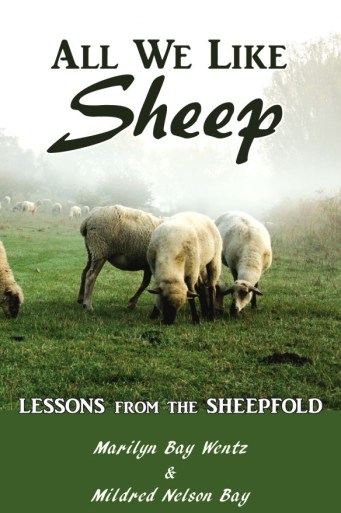
All We Like Sheep : Lessons from the Sheepfold  Produced with Team Effort

IMG_0644 - 2-Copy

GREELEY, COLO.—Colorado Book Award 2014 finalist Marilyn Bay Wentz, has teamed up with her mother, Mildred Nelson Bay, (both of Eaton, Colorado) to write a series of sheep stories and the lessons both women have learned from their collective seven decades of raising lambs commercially. All We Like Sheep: Lessons from the Sheepfold was released Sept. 15, 2015.

Wentz, a journalist whose first book, Prairie Grace (historical fiction set in 1864 Colorado Territory) was an award finalist, credits her mother as her mentor in both writing and sheep herding. Wentz says, “It was an amazing experience to write this book with my mother, considering her depth of knowledge, her love of both sheep and the Bible, and her gentle humor.”

All-We-Like-SheepAll We Like Sheep, a mix of creative memoir and Bible-centered devotional, was conceived from the heart and experience of this mother-daughter duo. “People see flocks of sheep grazing in the mountains or on the plains but understand little about the joys and trials of herding sheep,” says Bay. “Stories in All We Like Sheep: Lessons from the Sheepfold help the reader understand sleepless nights of lambing, attacks on the ewes by rogue dogs and coyotes, the bond experienced when the lambs respond to the shepherd’s voice, or how sheep protect themselves and ewes always recognize their own lambs.”

All We Like Sheep: Lessons from the Sheepfold closes the experiential gap between those who farm sheep, those who enjoy seeing pastoral scenes of sheep, and those who would like to better understand why the Bible so often mentions sheep (over 500 times).

These women are talented storytellers. Christian readers, especially, will appreciate the spiritual and biblical insights that Wentz and Bay have gleaned from their sheep-herding experiences. Each story/chapter closes with questions ‘to ponder’ and a short prayer. Photos from the sheep farm are sprinkled throughout the book.

Chapter titles include: “Ice Baby,” “A Lamb Called ‘Her’,” “The Little Ewe Who Thought She Could,” “Keep Out the Thief,” “It’s All About the Smell,” “Eternity in Our Hearts.”

Marilyn Bay Wentz grew up on the property her parents still farm northeast of Eaton, then lived in rural Strasburg for nearly two decades. She has written hundreds of news releases and articles for agricultural organizations and other clients. Mildred Nelson Bay and husband, Marvin, have farmed since 1970. She has been active in her local church, AWANA and Gideons, International, and has written articles for regional publications.

Click to learn more about All We Like Sheep, Lessons from the Sheepfold.


Afflict the Comfortable?

Bullet holes in the front door of the Alexander’s home in Taipei. Two members of the family were used as human shields and shot in police crossfire. Yet the Alexanders forgave their terrorist captor and helped lead him to faith in Christ before he faced execution for his crimes.

The famous newspaperman Joseph Pulitzer is said to have had this motto:

“Comfort the afflicted and afflict the comfortable.”

Do you think this is a good motto for a Christian writer? And maybe for a Christian reader?

Jesus gave comfort to the afflicted. He saw the real needs of individuals and responded in love and power. Today, the Lord works through his people to give comfort to those who are burdened, oppressed, and bereft; to build up others in love and faith to sustain them in the difficulties of life.

On the other hand, Jesus often unsettles us—afflicts us, if you will—with his words and actions. He criticized the religious and political establishments. He gave his time and attention to the weak, the sick, the unlovely, the powerless. He spoke directly to the heart.

Does the Lord want to use you as a writer to challenge and unsettle those who are insulated in ease? Perhaps the Lord wants to remind us of his call to feed the hungry, heal the sick, comfort those who mourn.

To be used this way, you may need to let him move you out of your “comfort zones” of shallow thinking, self-protection, and playing it safe. Read Jesus’ Sermon on the Mount. Read the Acts of the Apostles. Read about the lives and deaths of the early-church martyrs. Read about Christian persecution and martyrdom in the world today.

Other suggestions for reading that will “afflict” us out of our false comfort and into a life of more compassion and faith:

John and Judy Pex’s story of their work in Eilat, Israel. Reading about the Pex’s 30 years of personal evangelism in Israel can fortify you with the desire to live out the life of Jesus, perhaps even opening your home, your arms, or your prayers and giving to reach others with God’s love.

Stories of Christian refugees fleeing the genocide in south Sudan will disturb your ease but may also give you perspective on the troubles you face.

Reading about the Alexander family’s hostage experience at the hands of a Taiwanese terrorist may afflict you when you realize what evil there is in the world and what sufferings God allows his people to go through; or the Alexander’s story may comfort you to see how they were able to show love and salvation to the very man who caused them great bodily injury and emotional harm.

Now a word to readers: Open your hearts to what our Lord, who himself comforts the afflicted and afflicts the comfortable, may be saying to you. Don’t just read books that offer escape and make you feel good and even more comfortable. Read books that challenge you, maybe even afflict you with a desire to show compassion.

Evaluating the Past and Planning for the Future

Today I’m wearing my Analyzing/Forecasting hat.

hat-12

Larry has finished compiling last year’s book sales data from the careful records he keeps throughout the year. He lays before me a stack of neatly-columned reports. Now I take a deep breath, find my Financial Analysis hat, dust it off (most of the time I leave this side of the business to Larry) and sit down to focus on the telling numbers.

Each author will receive a statement (usually accompanied by a check) listing how many of their books sold last year, how many were returned, how many were given away as samples and review copies, the gross and net income we received for those sales, and the amount of author royalties for. I read through each line of these reports before they are sent to our authors.

In addition, Larry has print-outs for me of income, expenses, inventory, etc. I look these over, too, and bring my questions back to him. He patiently provides answers and makes adjustments where needed.

I’ll be glad to get back to the creative side of publishing. But I know that looking at these numbers and columns and net sums, is critical. Trends jump off the page at me and color my thinking about future decisions for Cladach.

First, I thank the Lord for the thousands of copies of Cladach books sold during the year. They sold through online retailers, wholesalers, events, bookstores, our website, and through the efforts of the authors. From our warehouse we send out varying quantities of paperback books almost every day. We love sending them out to reach buyers and readers, because that means they will minister to people, encourage them, instruct them, inspire them, help them see God at work in our world, help them experience Him more.

Then, I bring to the Lord our successes and our failures, and lay them at His feet. We have prayed over the acquisition, development, production, and marketing of each book. We are human, though, and make mistakes. Some of our titles have kept up regular demand and sales for years. A few have struggled to earn back the money we put into producing them. Most of the latter are excellent works by talented and sincere authors. Somehow, though, a few of those haven’t “grabbed readers.” We will keep trying, because we believe in these titles and these authors.

Next, I acknowledge the trends: For instance, with fiction titles, generally more e-books sell than paperback books. With all our titles, the more the author is active in marketing their books and connecting with readers, the more their books sell. Authors who have a “platform,” ministry, are well-known as an expert in their field, have several books published, and are active daily in some aspect of marketing their books — their books sell the most copies. This has to influence my decisions in acquiring future titles/authors.

It’s interesting to see how different books sell better through different sales channels. Some sell consistently through wholesalers, others simply don’t, but they sell well on Amazon. Some titles we mostly sell directly to the authors, who have ways of selling direct to customers. We give authors a generous discount, so they can actually make a lot more money on these sales than they can make with royalty income from Cladach’s sales. It’s a win-win, and most importantly, hope-giving books reach readers.

Perhaps I’ll share more trends in future posts. For now, I’ll hand the data/reports back to Larry and give attention to things I enjoy more: words, ideas, design, promotions, and the people behind the numbers. … I have a hat for that!

Running the Race ~ Writing for the Lord

A line-up of Cladach authors

Cladach’s Talented and Dedicated Authors

What makes a good author?

A good author is someone who has a burning desire to communicate through written expression, will pay the price to learn the craft of writing, will apply themselves to the process of writing, and will always keep their readers in mind. A good Christian writer loves the Lord, loves words, and loves people.

They can clearly answer the reporter’s questions:

Who: They know for Whom and to whom they are writing.

What: They have a clear focus and plan for what they are writing.

Where: They have a place to write and regularly “apply the seat of their pants to the seat of the chair” with pencil in hand or hands on keyboard.

When: They have a regular time to write and also have learned to snatch the moments and ideas as they come.

Why: They know why they are writing. A writer’s motives may vary: money (dream on), fame (rare and elusive), satisfaction, to scratch the itch (they can’t not write),…  Or, they relate to what the Olympic runner, Eric Liddell ‘s character said in Chariots of Fire: “God made me fast. And when I run, I feel His pleasure.”

If God has truly gifted these writers to write for Him, then their writings will give pleasure to readers also. From their writings readers will gain inspiration, courage, hope, understanding, insight, help.

These Christian writers have taken to heart Hebrews 12:1-2.

On hopeful paths of prayer and poetry,

~Catherine Lawton


Cladach Authors Reflect the Body of Christ

Illuminated-C

Cladach authors come from various streams of the body of Christ:

Baptist, Nazarene, Evangelical Presbyterian, Nazarene, Vineyard, Christian Church, Assembly of God, Salvation Army, Messianic, Orthodox, Catholic, Evangelical Free, Episcopalian, etc.

We seek to have agreement on the essentials of the Faith, liberty in non-essentials, and in all things love!

Do you follow Wesley? Calvin? Wimber? Jonathan Edwards? Phineas Bresee? Phoebe Palmer? Catherine Booth? The Early Church Fathers?

I wonder how our perspective might change if we were allowed a glimpse of all those men and women in fellowship together in Heaven and praising God together?

“They will know we are Christians by our …” Denominational affiliation? Theological distinctives? Form of government? Church buildings? Politics?

No.

“They will know we are Christians by our love.”

That doesn’t mean I don’t think theology is important. I do. I study it; I listen for it in sermons I hear and books I read. I sometimes write about it.

But I find it interesting that we tend to believe, sometimes fiercely, the theological slant of the particular tribe or camp into which we were born, or where we first came into the Faith and received teaching, or where we found soul refuge, acceptance and belonging.